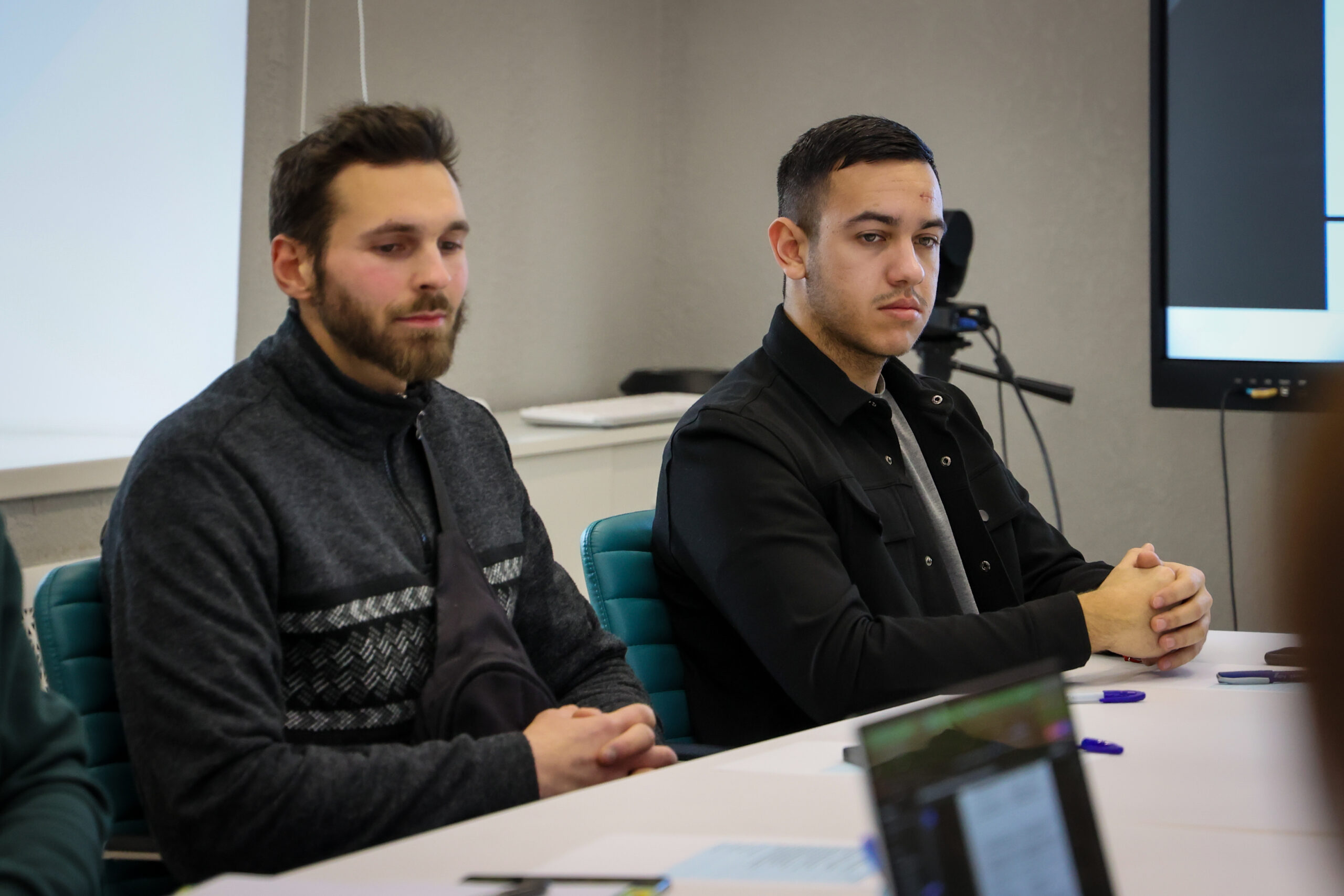
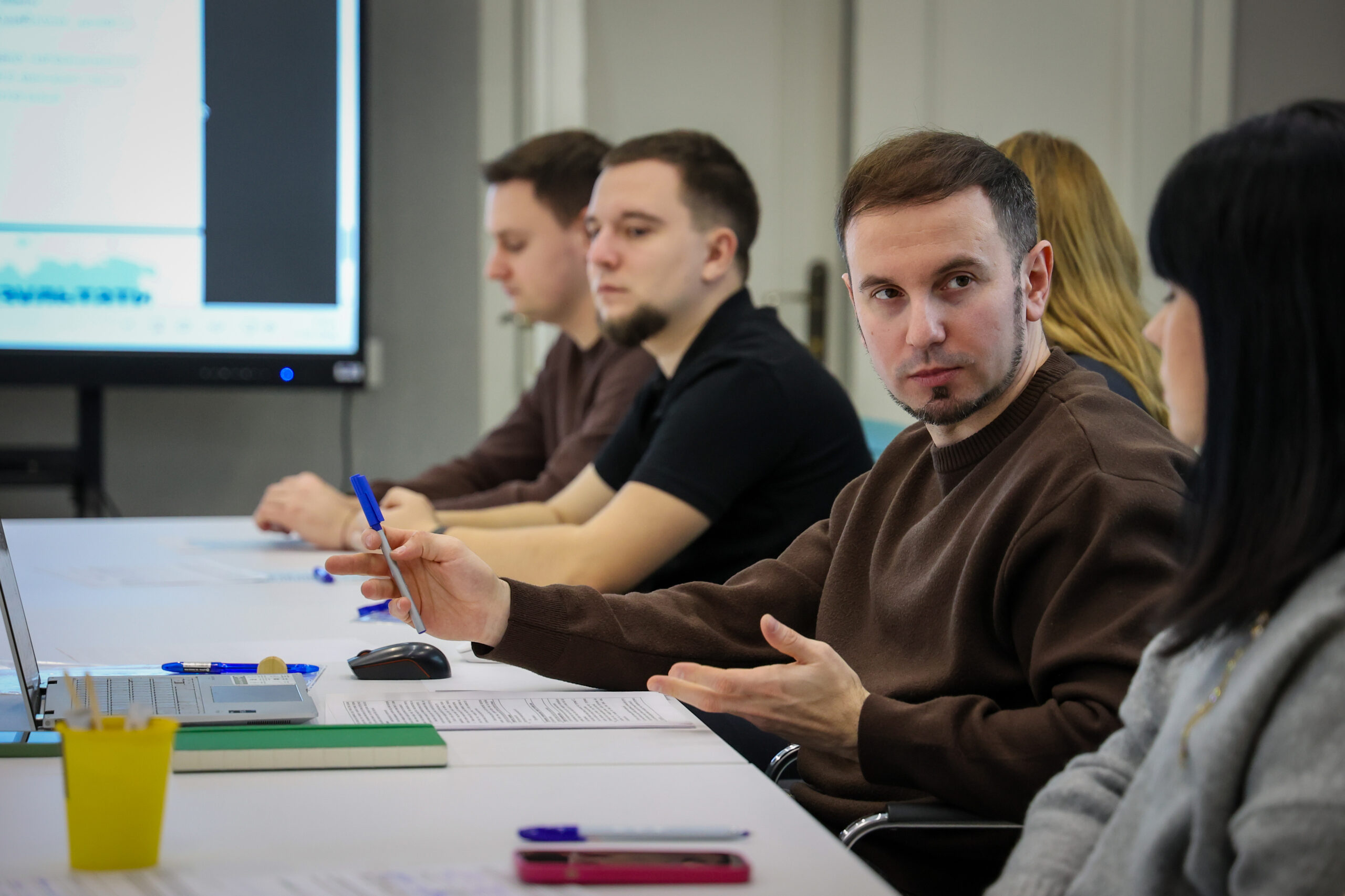
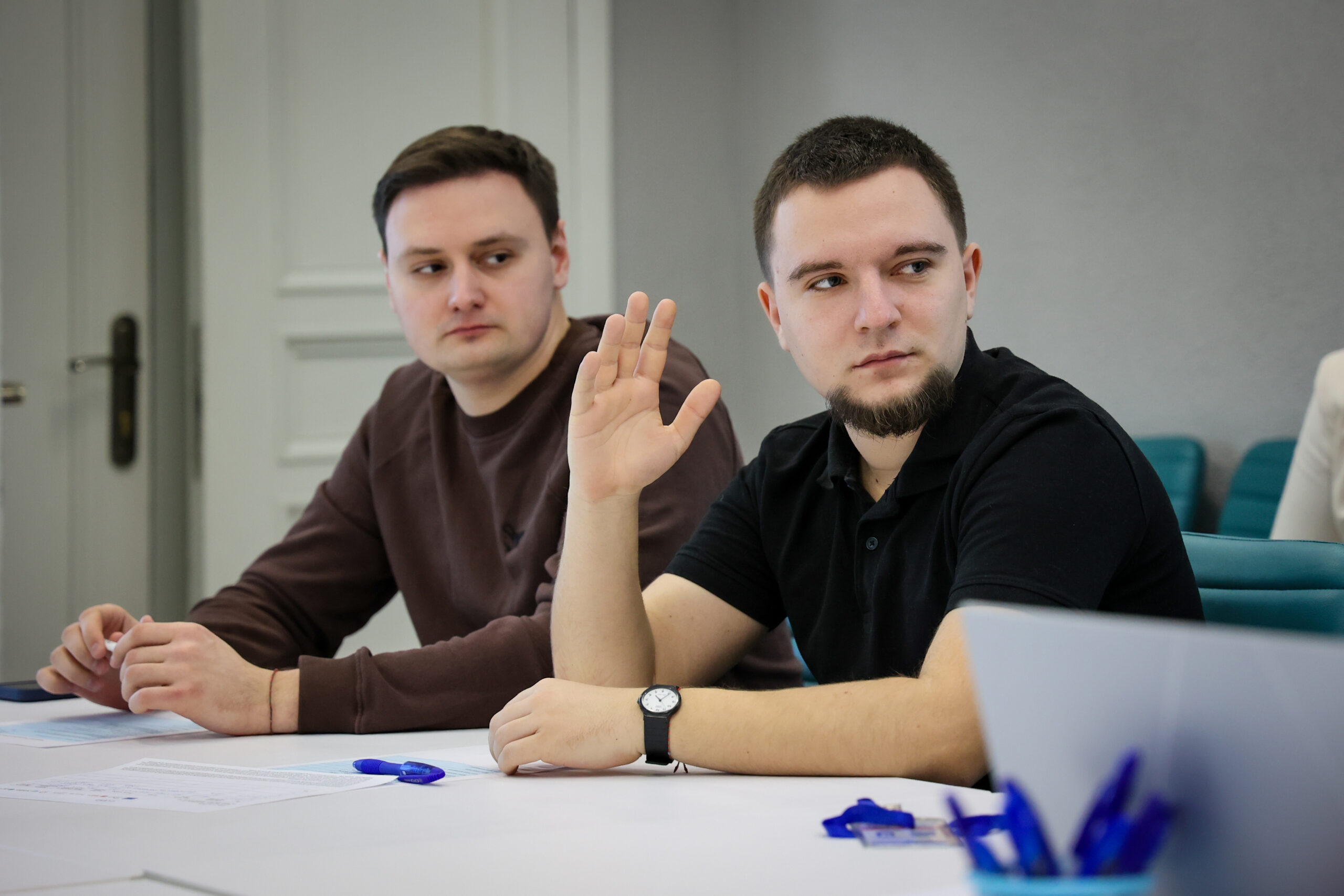
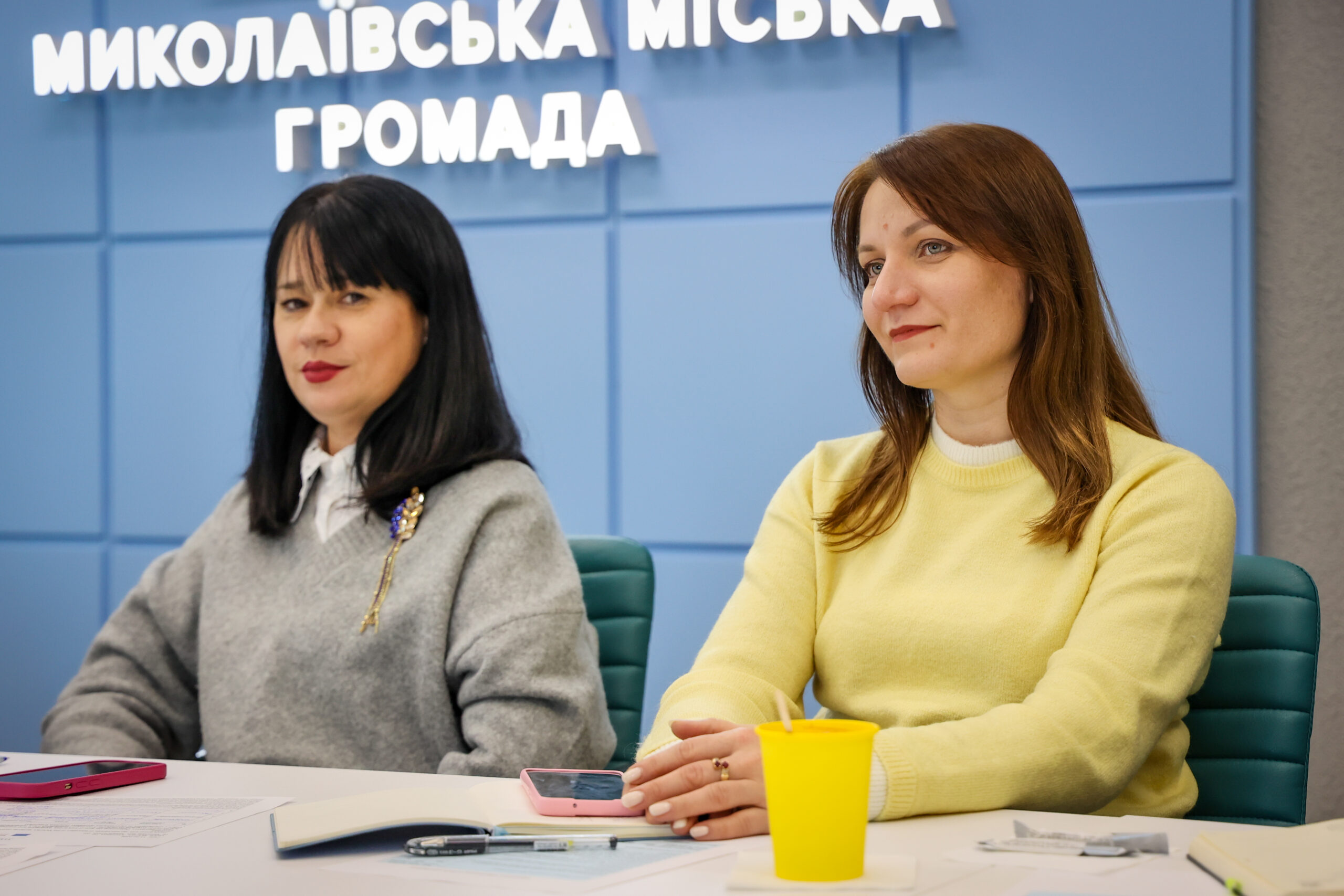
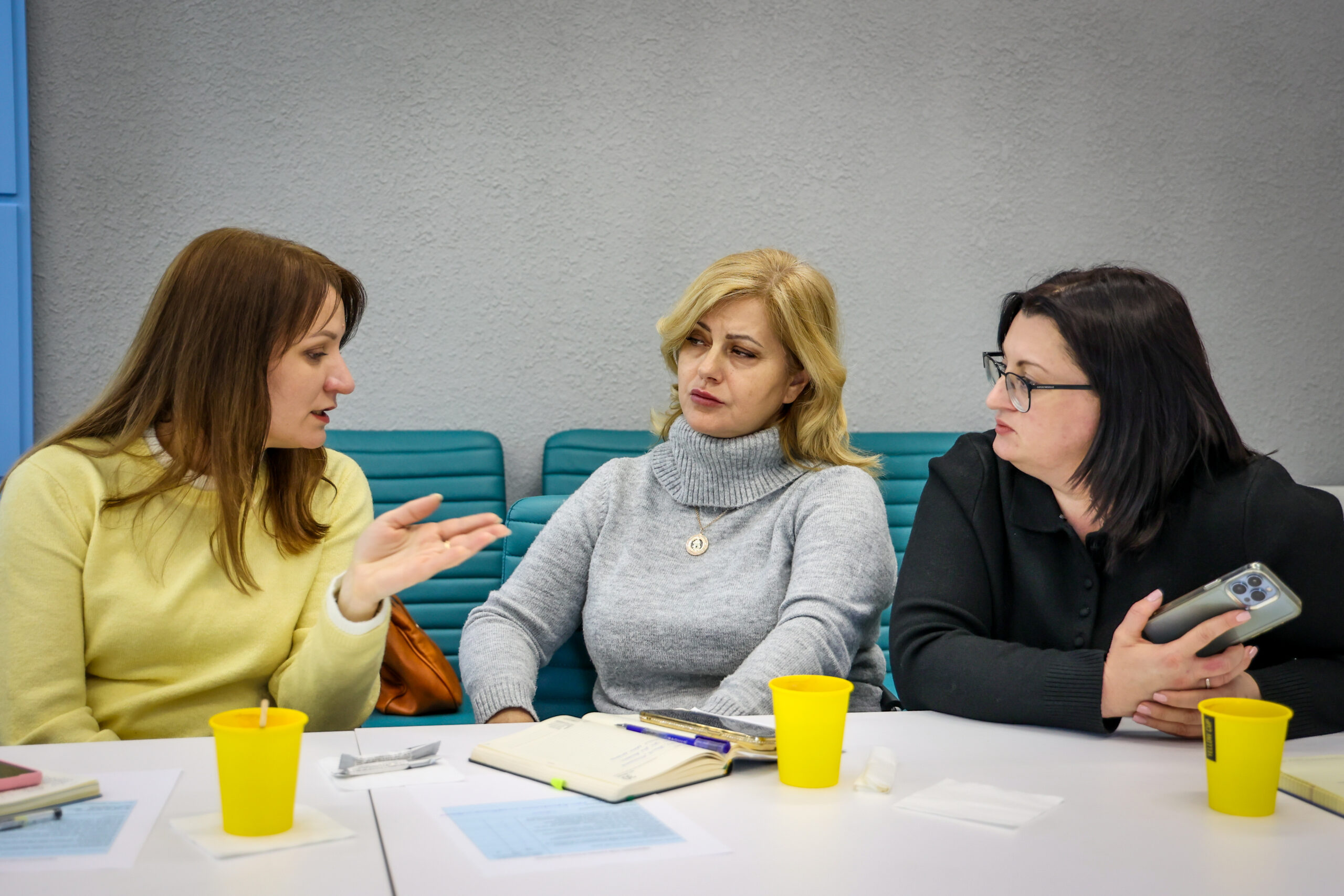
A focus group was held with teachers from higher education institutions: Mykolaiv National Agrarian University and Petro Mohyla Black Sea National University. They discussed the experience of participating in European educational programs, the main barriers and needs of the academic community. Educators shared their experience of academic mobility, internships and international educational projects. It was about both individual opportunities – short-term trainings, exchanges and research trips, and institutional cooperation between universities.
Successful case
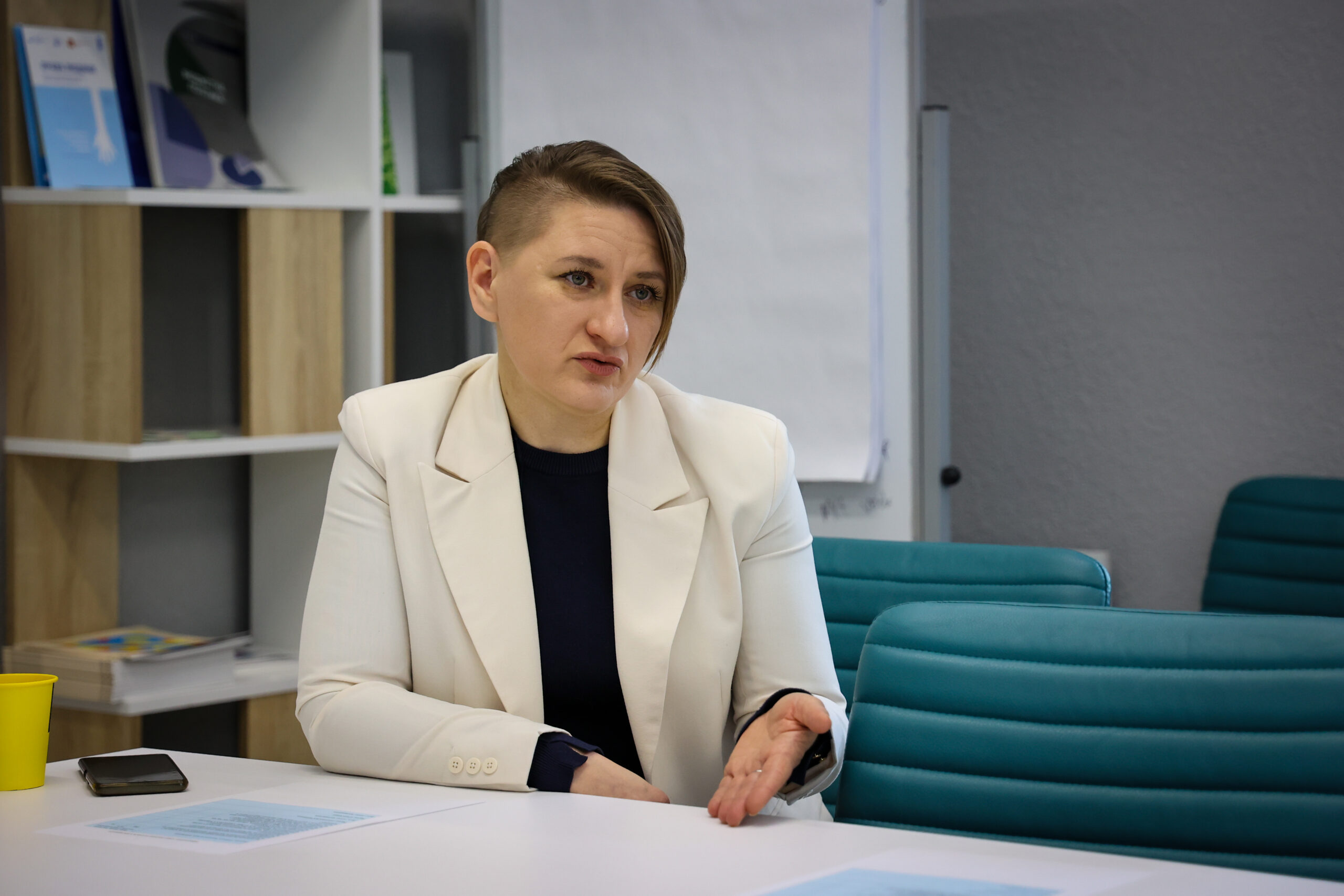
Leading specialist of the International Relations Department of Petro Mohyla ChNU and coordinator of several Erasmus+ projects Olena Filimonova says that during the period of full-scale war, opportunities for Ukraine have increased significantly. In 2022–2024, the university implemented about 70–80 mobilities per year for staff: from short-term Staff Week to long-term research trips.
Olena Filimonova’s main area of expertise is Erasmus+ Key Action 2 (Capacity Building in Higher Education) projects. She is the consortium coordinator and direct coordinator of the large-scale project DEFEP (“Distance Education of the Future”), where Petro Mohyla ChNU is the main beneficiary. She also acts as the manager of the PROMENT (“Development of Mentoring and Tutoring Systems in Higher Education Institutions”) project, coordinated by Lviv Polytechnic.
In addition, Olena Filimonova managed the development and implementation of several modules on European values, EU security policy, anti-corruption standards, and water security. After the completion of the projects, all modules were successfully integrated into the university’s catalog of elective disciplines.
“The success of a project depends on two factors: the value of the idea — how relevant it is and how it really meets people’s needs, and the value of the team — how united, expert, and able to work together even in stressful conditions,” said Filimonova.
Particularly telling was the fact that the university’s first major application for a higher education capacity-building project, submitted in February 2022 (a few days before the full-scale Russian invasion), passed on the first attempt.
“Without carefully reading all the guides, instructions and recommendations of the European Commission down to the last comma, even the strongest idea may not pass,” she explains.
Challenges that teachers spoke about
Language and intercultural communication. The most common obstacle is an insufficient level of English (a confident B2+ is required for business correspondence and live communication). Many noted an underestimation of national characteristics: Germans require a clear schedule and accuracy, Italians and Spaniards require flexibility, and the preparation of a large consortium can take a long time.
Finding reliable partners. “The international department cannot find partners for you. Cooperation begins at the professor-professor level,” the participants emphasized. Those who already have previous experience of joint conferences, publications, or small-scale mobilities have the best chances.
Bureaucracy of departure under martial law. For men, the procedure for applying to the Ministry of Education and Science and the State Border Guard Service remains complicated. Having a reservation simplifies the process, but does not completely eliminate it.
Subjectivity of application evaluation and bureaucracy of implementation. Jean Monnet and Horizon Europe are often criticized for the high subjectivity of experts. Budgeting, taxes, treasury restrictions of universities (fixed hourly rates of pay) create additional difficulties.
Lack of a specialized project office. Unlike large universities in Kyiv, Lviv, or Kharkiv, in Mykolaiv, project support falls on the shoulders of individual teachers and small international departments.

Which EU programs are most suitable for teachers
- Erasmus+ Key Action 1 (KA1) — individual academic mobility: Staff Week, teaching, training, internships (from 5 days to 2 months). The easiest and fastest entry for beginners. The 2026 competitions are already open.
- Erasmus+ Key Action 2 (KA2) — cooperation partnerships and projects for building the capacity of higher education (Capacity Building). Opportunity to be a consortium coordinator.
- Jean Monnet Actions — modules, chairs, projects, networks. Ideal for teaching European studies, anti-corruption, green economy, energy saving, public administration.
- Erasmus Mundus — joint master’s programs (design and administration).
- Horizon Europe — research projects (more complex, but with high funding). Special cooperation opportunities are available for Ukraine, in particular with the UK and other countries.
| Project name | Ukraine’s participation format | Brief description of the project | Link to information | Amount of funding |
| Віртуальні обміни у сферах вищої освіти та молоді (KA1 Virtual Exchanges in Higher Education and Youth) | Ukraine is a partner country (Region 2). Participation as a partner or associated partner (without funding – for associated partners). Only an organization from a Programme Member State can be the coordinator. | Online virtual exchanges between young people and students from EU and partner countries. Activities include facilitated online discussions, intercultural dialogues, development of digital and civic competences, media literacy, critical thinking. | Funding & Tenders Portal (Call ID: ERASMUS-EDU-2026-VIRT-EXCH-NE) | Up to €500,000. 5% co-financing. Up to 95% budget coverage |
| CBVET — Capacity Building in Vocational Education and Training (KA2) | Ukraine is a partner country, a full beneficiary in the consortium. It can be a partner, but not a coordinator (the coordinator is from the Programme Countries). | Projects to modernize vocational and technical pre-university education (VET) systems. Aimed at strengthening the connection between education and the labor market, developing competencies, digital and green transformation, and updating training programs. | Funding & Tenders Portal (Call: ERASMUS-EDU-2026-CB-VET in Neighbourhood East) | 100,000 – 400,000 € Lump sum. Co-financing 20%. |
| CBHE — Strand 3: Capacity Building in Higher Education (СВНЕ) | Ukraine is a partner country (Region 2). Cannot be a coordinator. Required: at least 2 Ukrainian HEIs + national authority (MES). | Projects to modernize higher education systems. They involve reforming educational programs, governance, quality assurance, integration with the labor market, digitalization, and institutional building. | Funding & Tenders Portal (Call: ERASMUS-EDU-2026-CBHE) | Depending on the type of project (often €400,000 – €1,000,000 within Strand 3) Lump sum. Co-financing according to the terms of the call. |
European grants are not only about mobility and funding. They are an opportunity to integrate European values, modern standards, and best practices directly into the educational process and scientific activities of Mykolaiv.
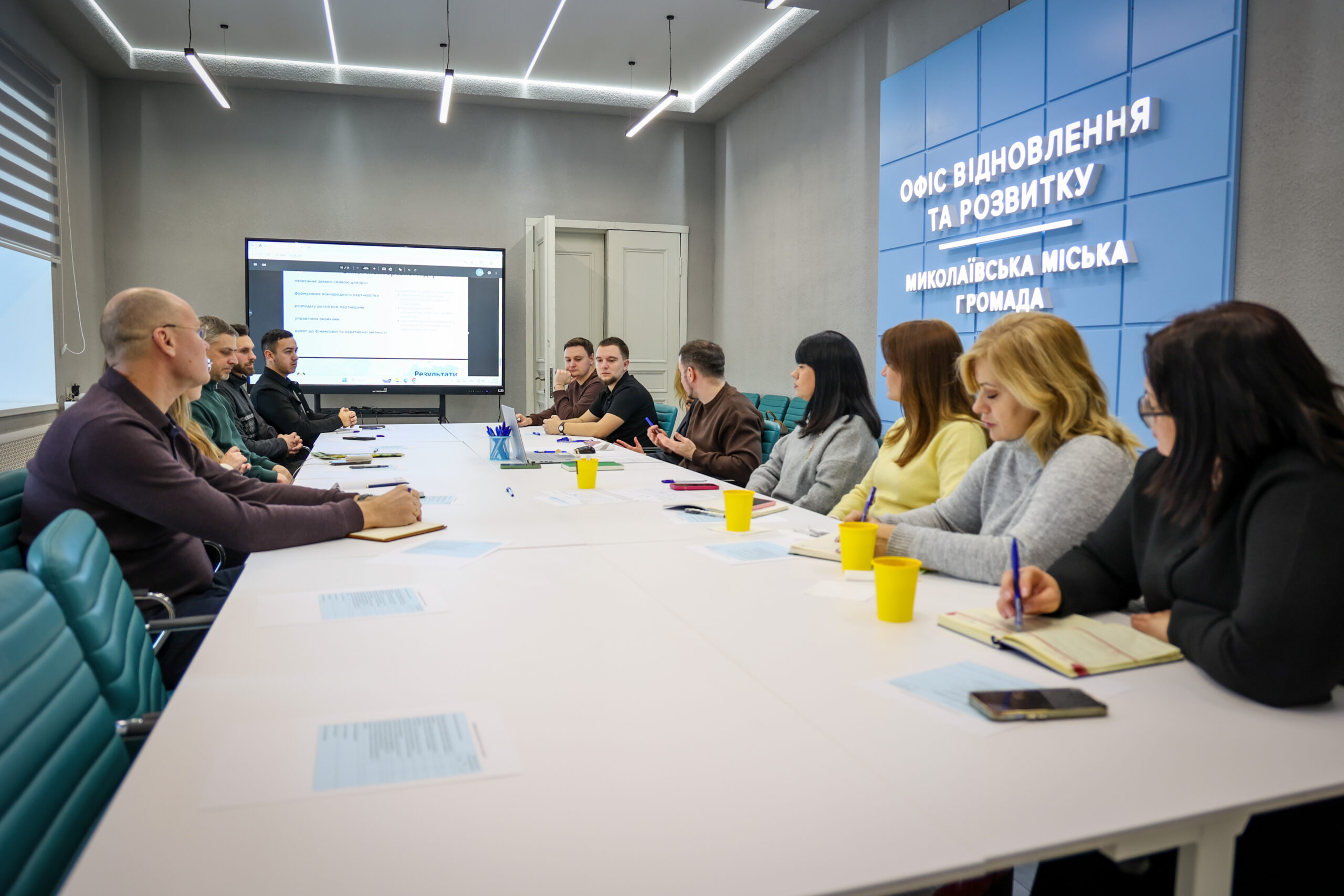

The material was prepared within the framework of the creation of the European Integration Office, which is implemented by the NGO “Centre for Adult Learning and Education “Pivden” in cooperation with the Mykolaiv Development Agency with the support of U-LEAD with Europe, funded by the European Union and its member states — Germany, Denmark, France, Austria, Poland and Slovenia.
Photo: Mykolaiv Development Agency