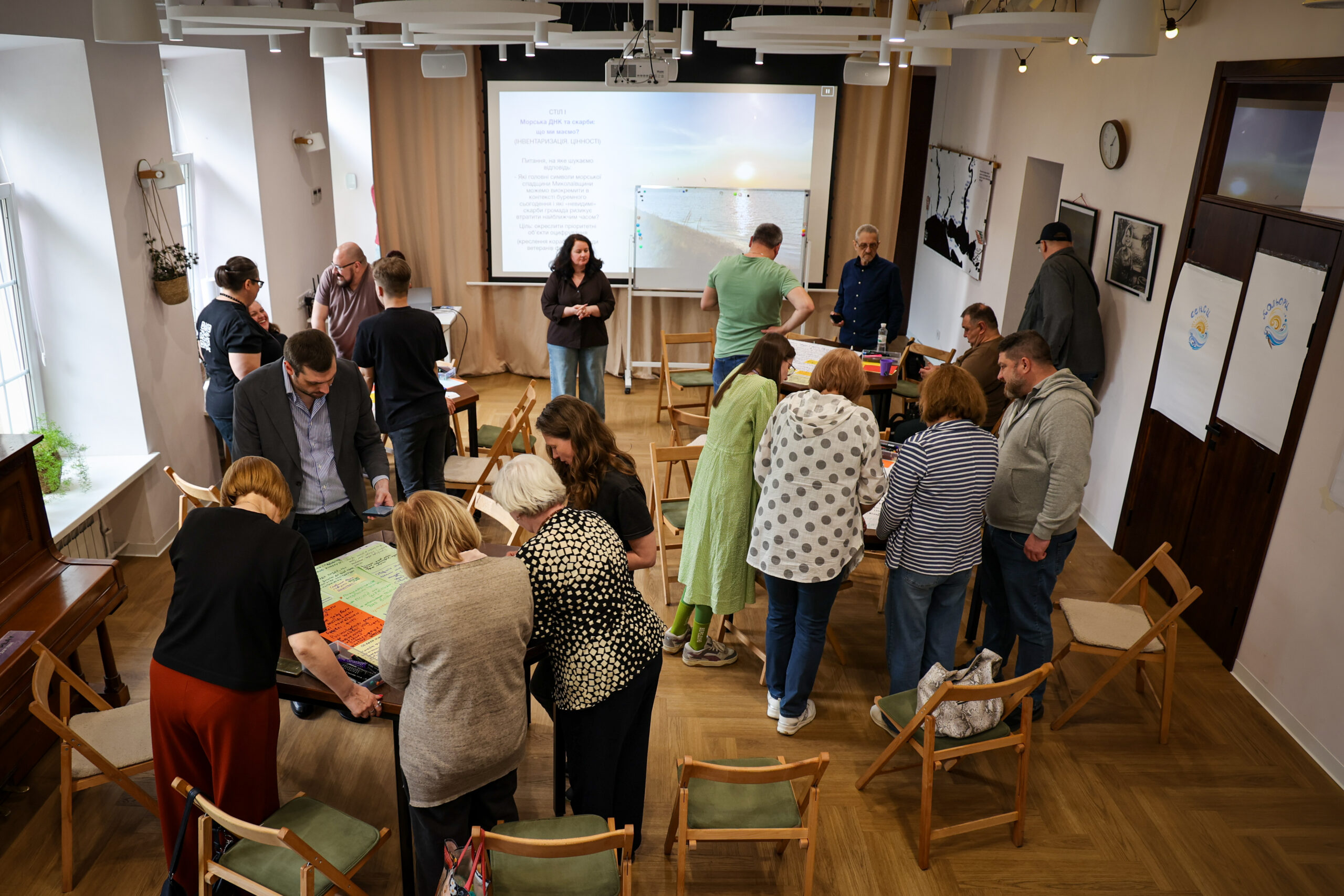
An Ideas Hackathon was held in Mykolaiv, dedicated to debunking old myths and searching for a new identity for the Ukrainian South. The event, organized on May 17 at the Ukrainian-Danish Youth House, brought together urban planners, researchers, artists, and local residents. The main goal of the event was to rethink the region’s “water code” in a context where the war and the security situation have temporarily limited the community’s physical access to large bodies of water.
Mykolaiv is a city born at the confluence of two rivers and facing the sea across a estuary. For a long time, the city’s identity was firmly anchored in the metal structures of shipyards and port cranes, reduced to the monolithic myth of the “city of shipbuilders.” However, water is a substance that does not tolerate stagnation. It washes away old constructs and demands constant renewal.
Today, when physical access to the open water is temporarily restricted or altered by war, water becomes for the community not merely a geographical given, but a space of memory and hope. Therefore, the “Mykolaiv’s Maritime Heritage” project is an attempt to view the maritime heritage of the city and region not only through the prism of tons of metal and launched ships, but through the human being and their interaction with space.
“The Earth’s surface, like the human body, consists mostly of water. This hypothesis is relevant to Mykolaiv, because it is the aquatic space, the presence of the open sea, and the city’s proximity to the sea that shape our city’s identity. Both in the past and today. That is why the presence of the sea nearby has always provided the city and the region with new opportunities. Although today the enemy is trying to take this opportunity away from us — to be with the sea,” noted event co-organizer Evgen Gomonjuk.
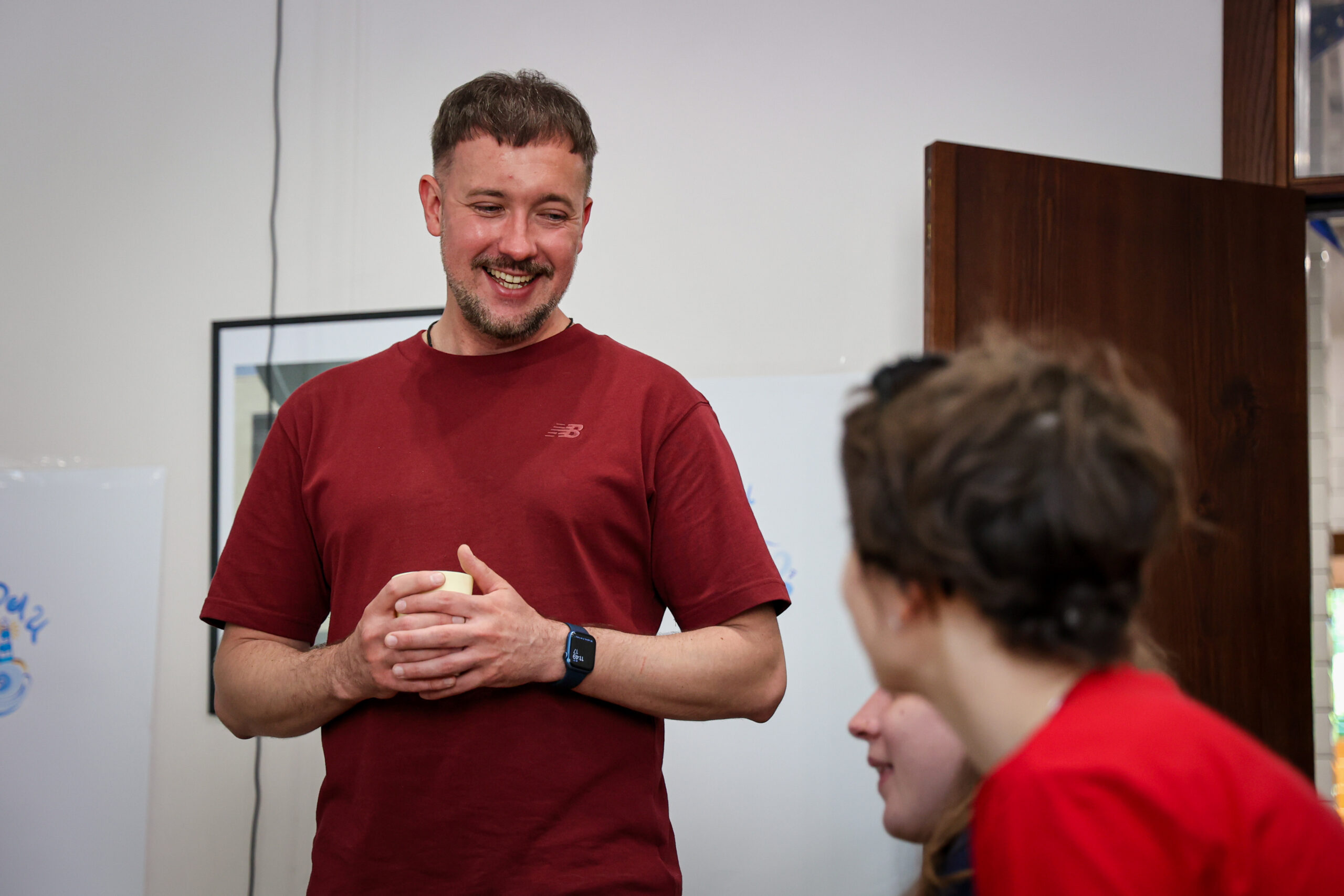
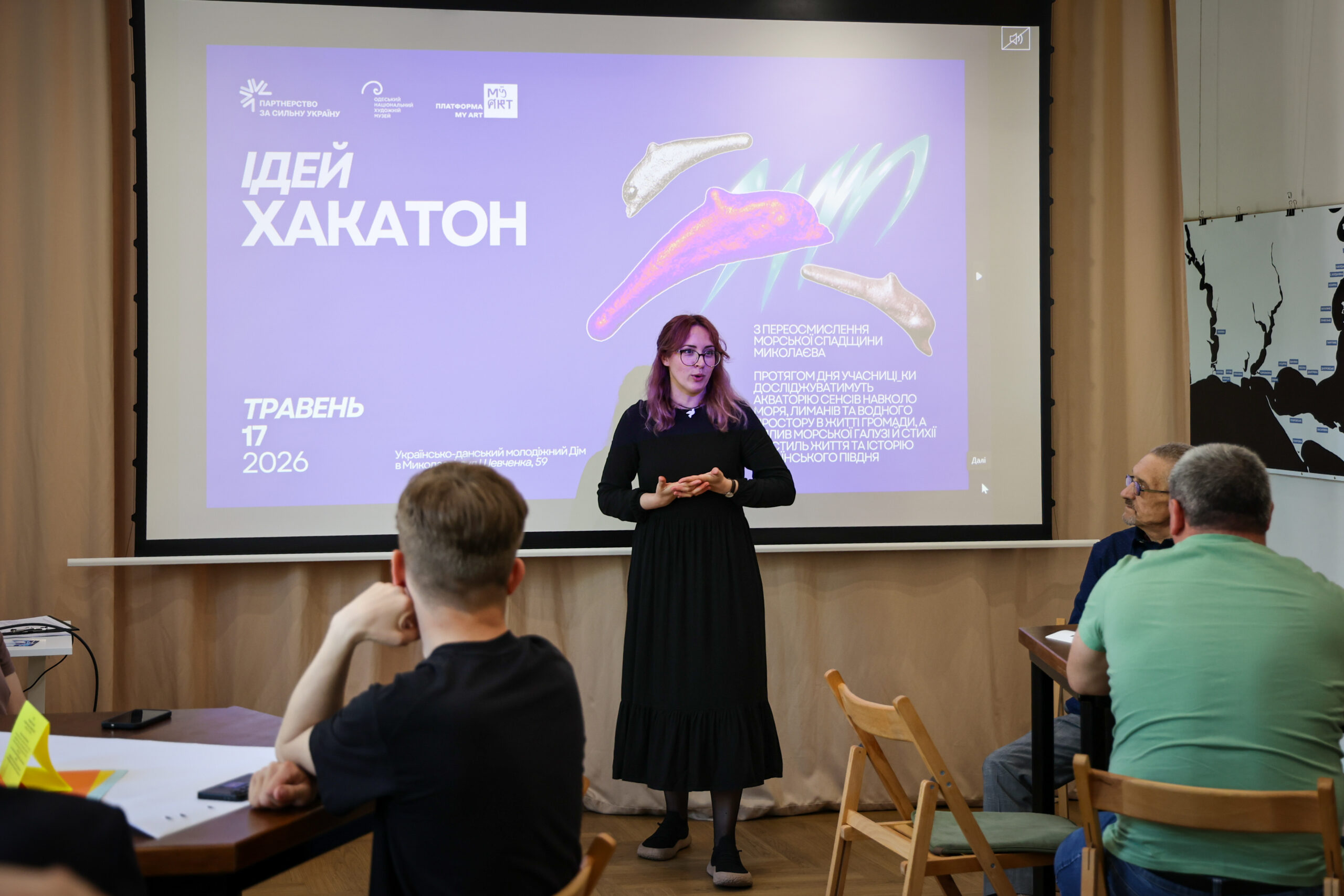
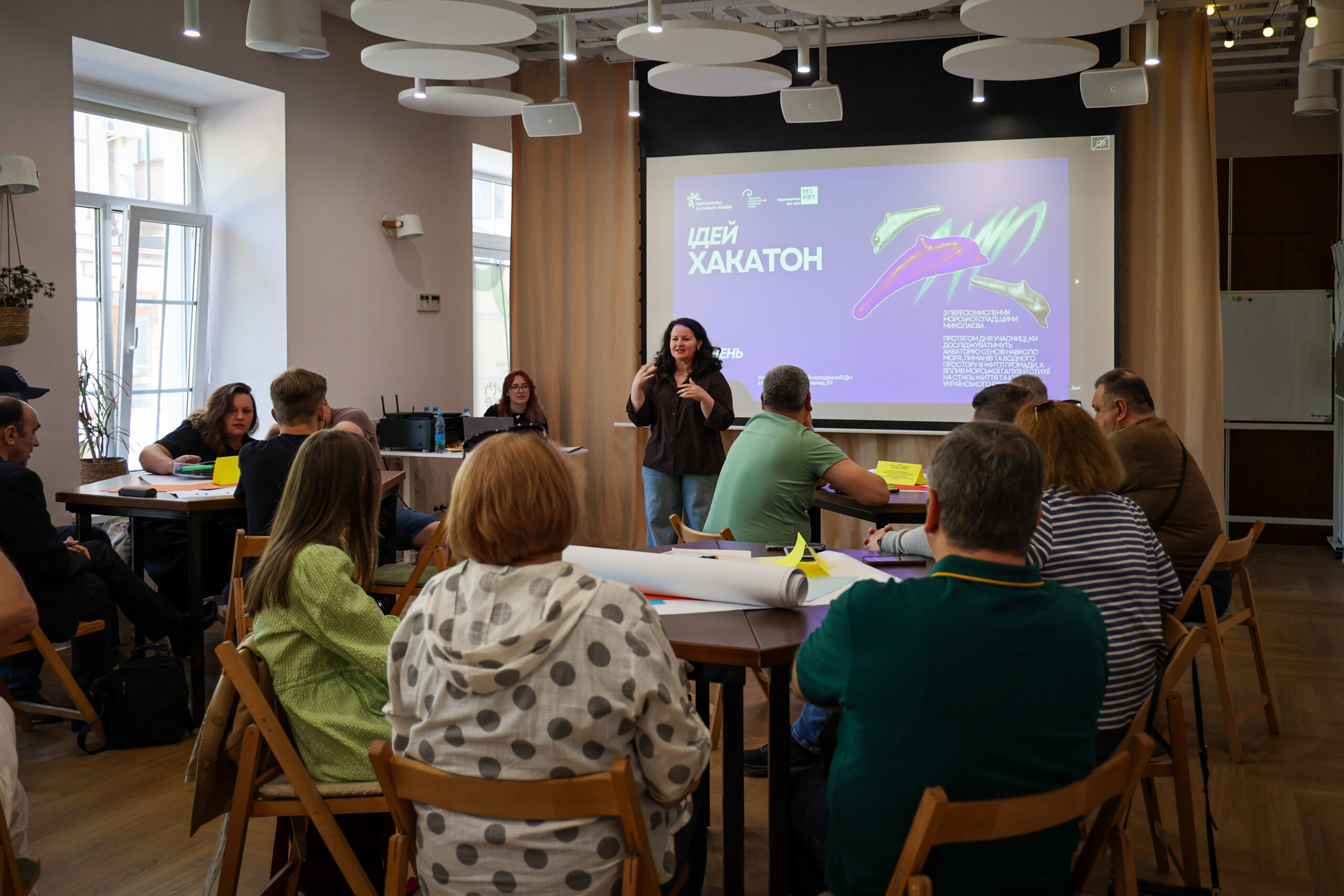
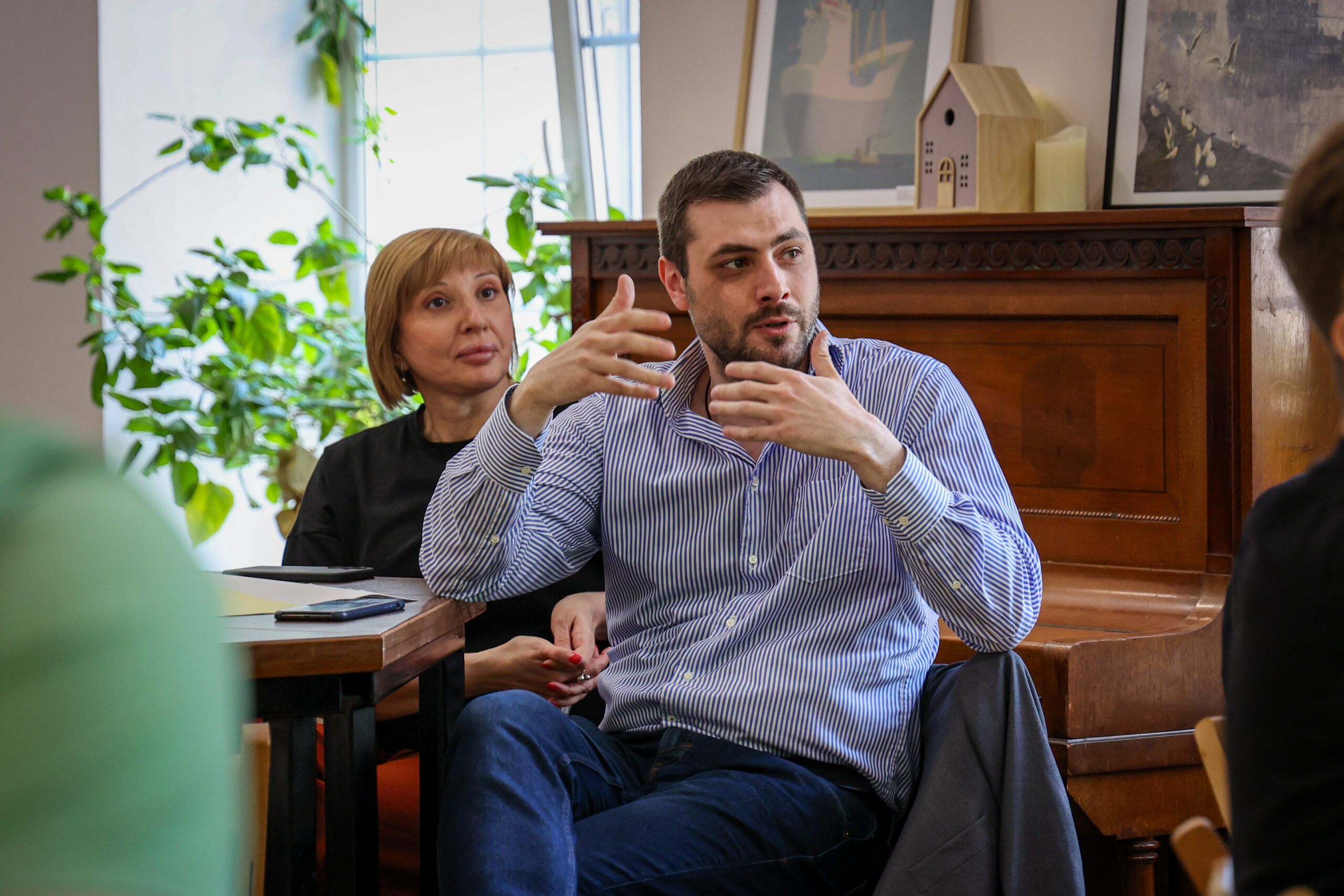
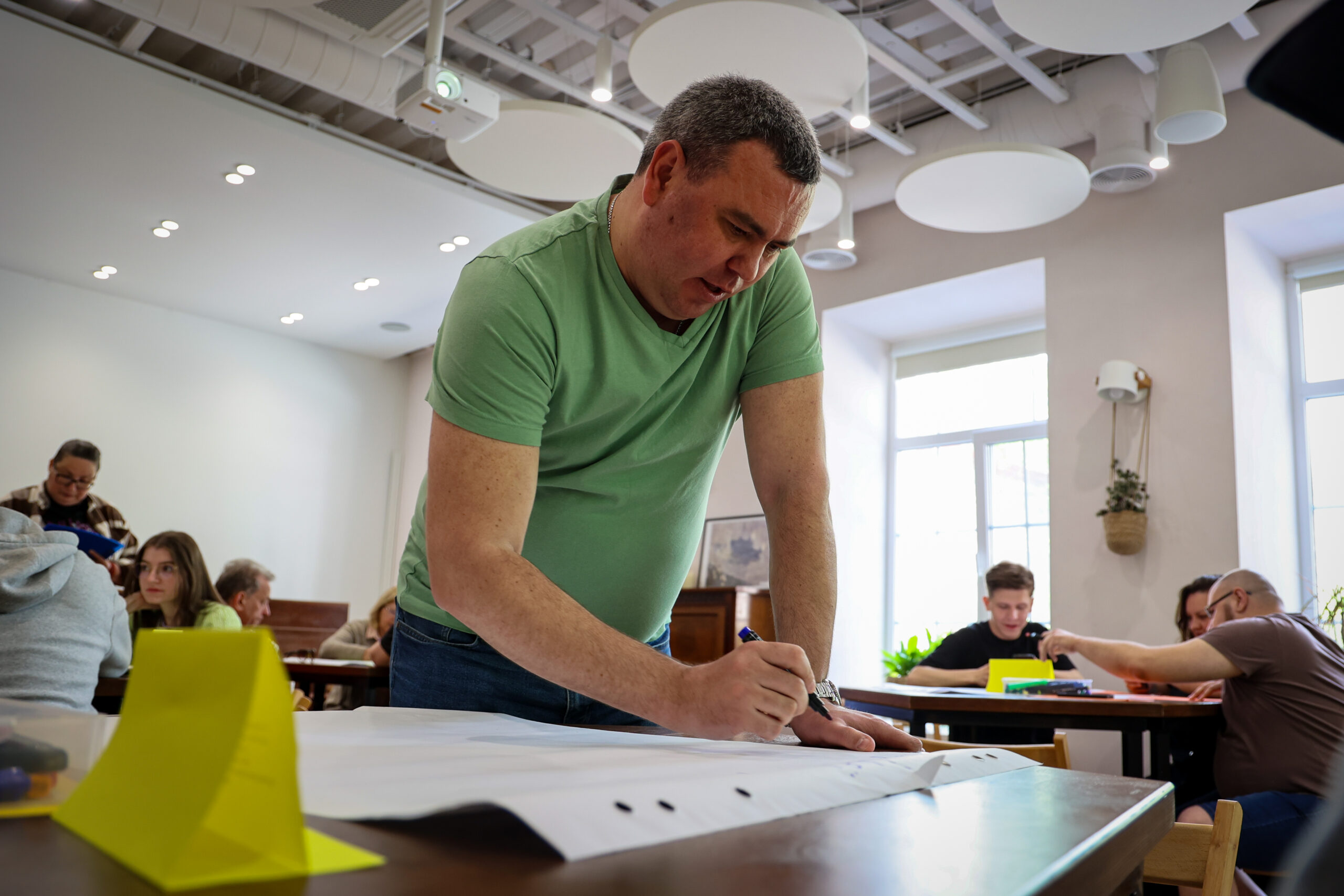
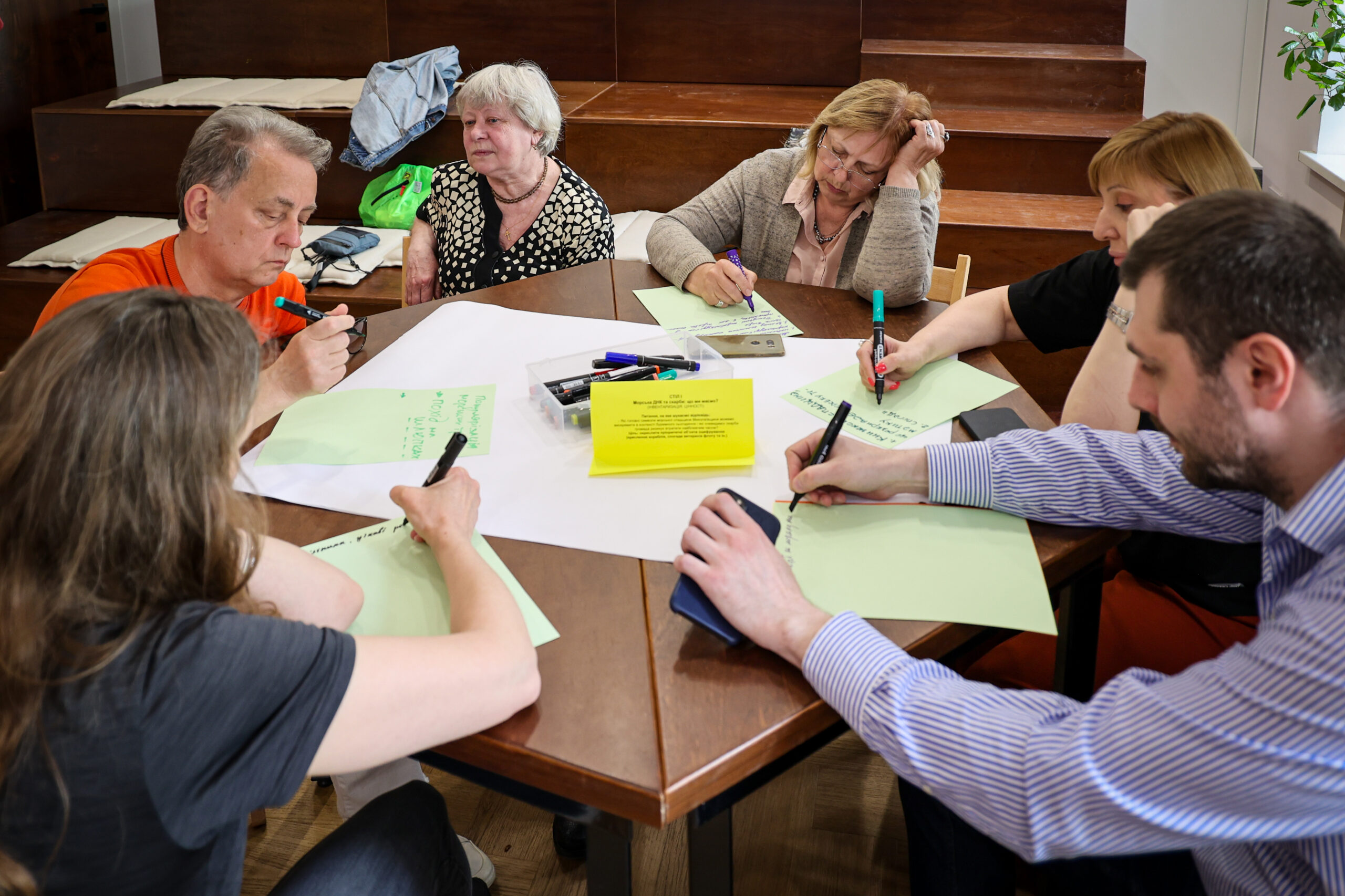
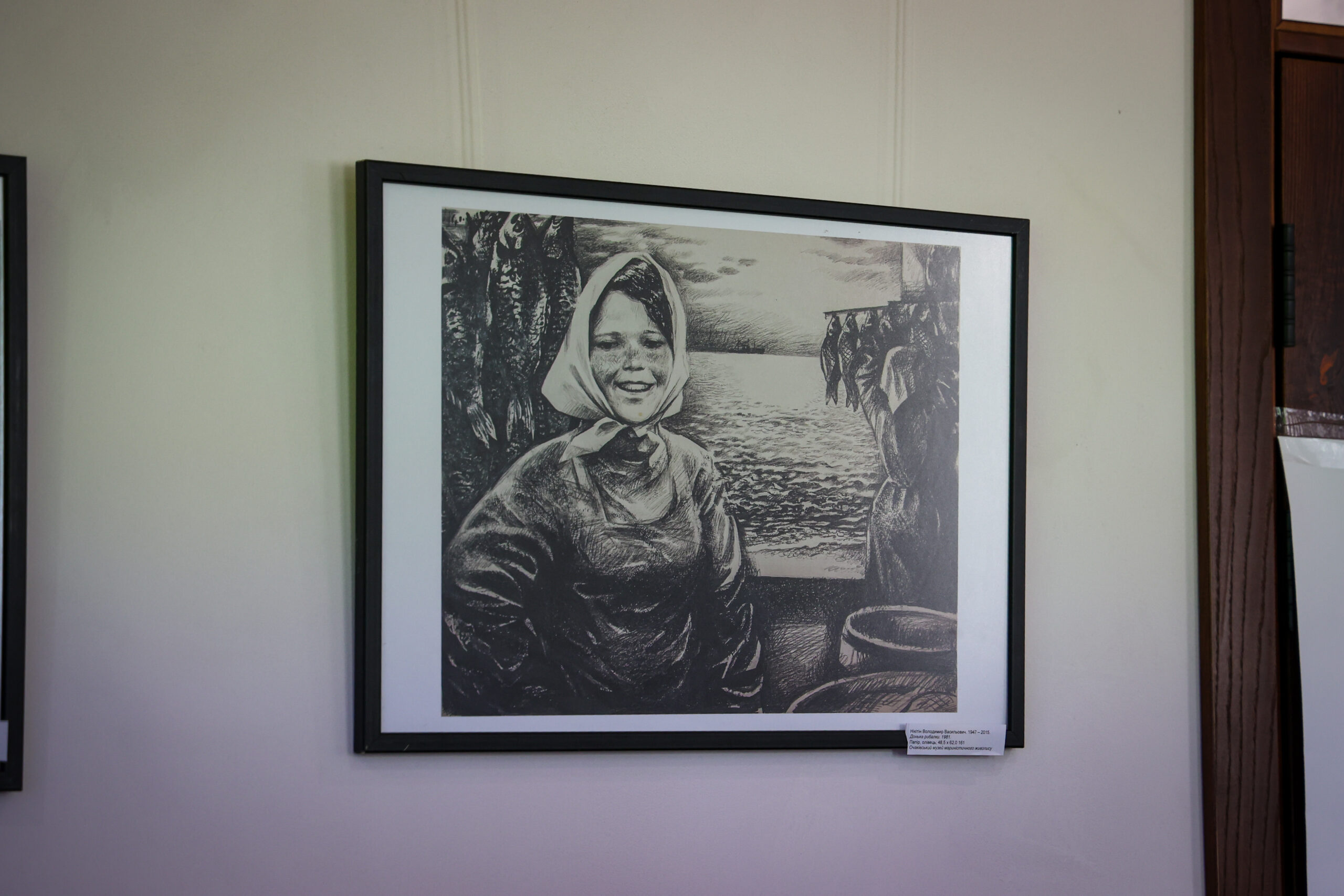
The hackathon program consisted of a closed session for experts and an open session for the general public.
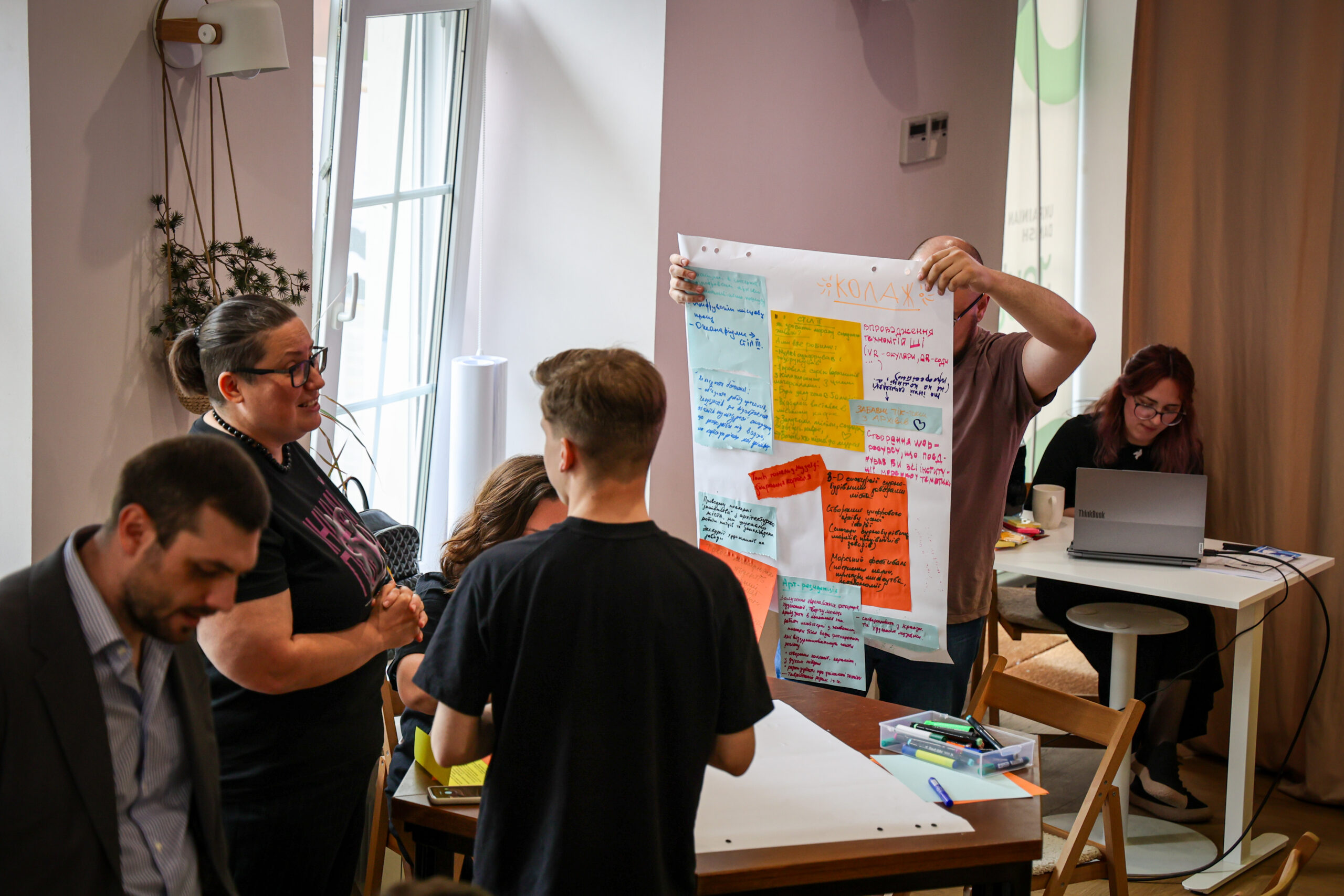
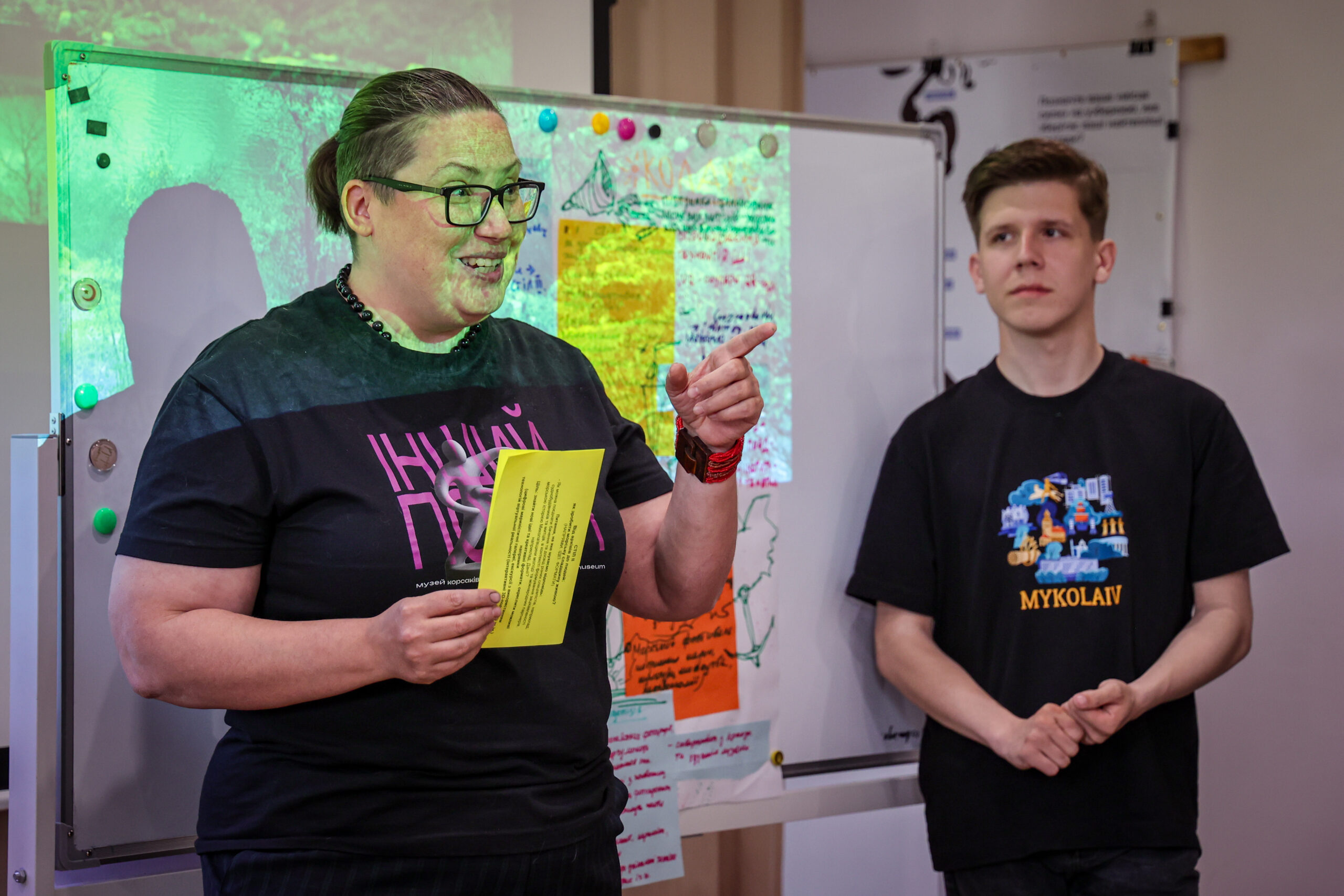
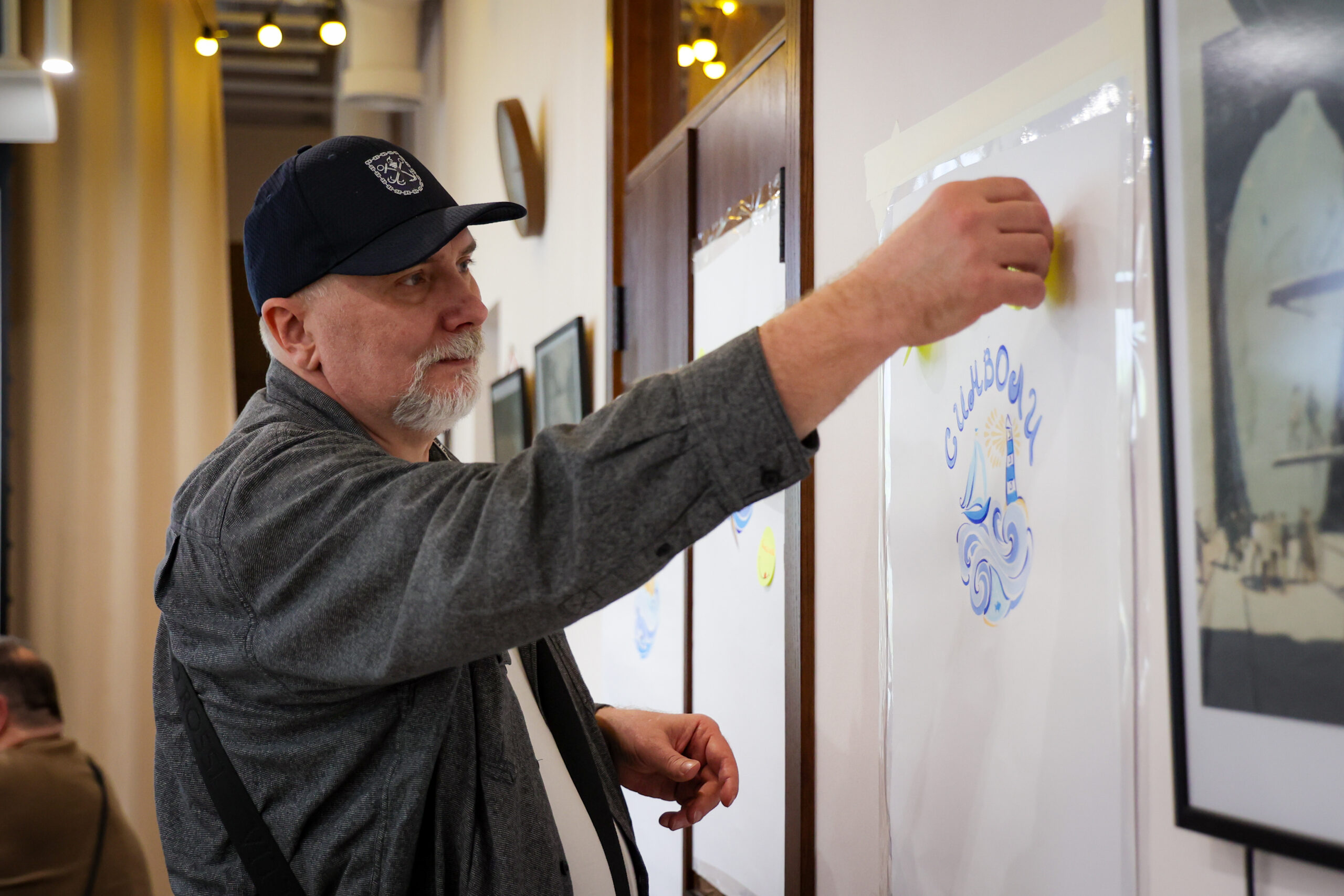
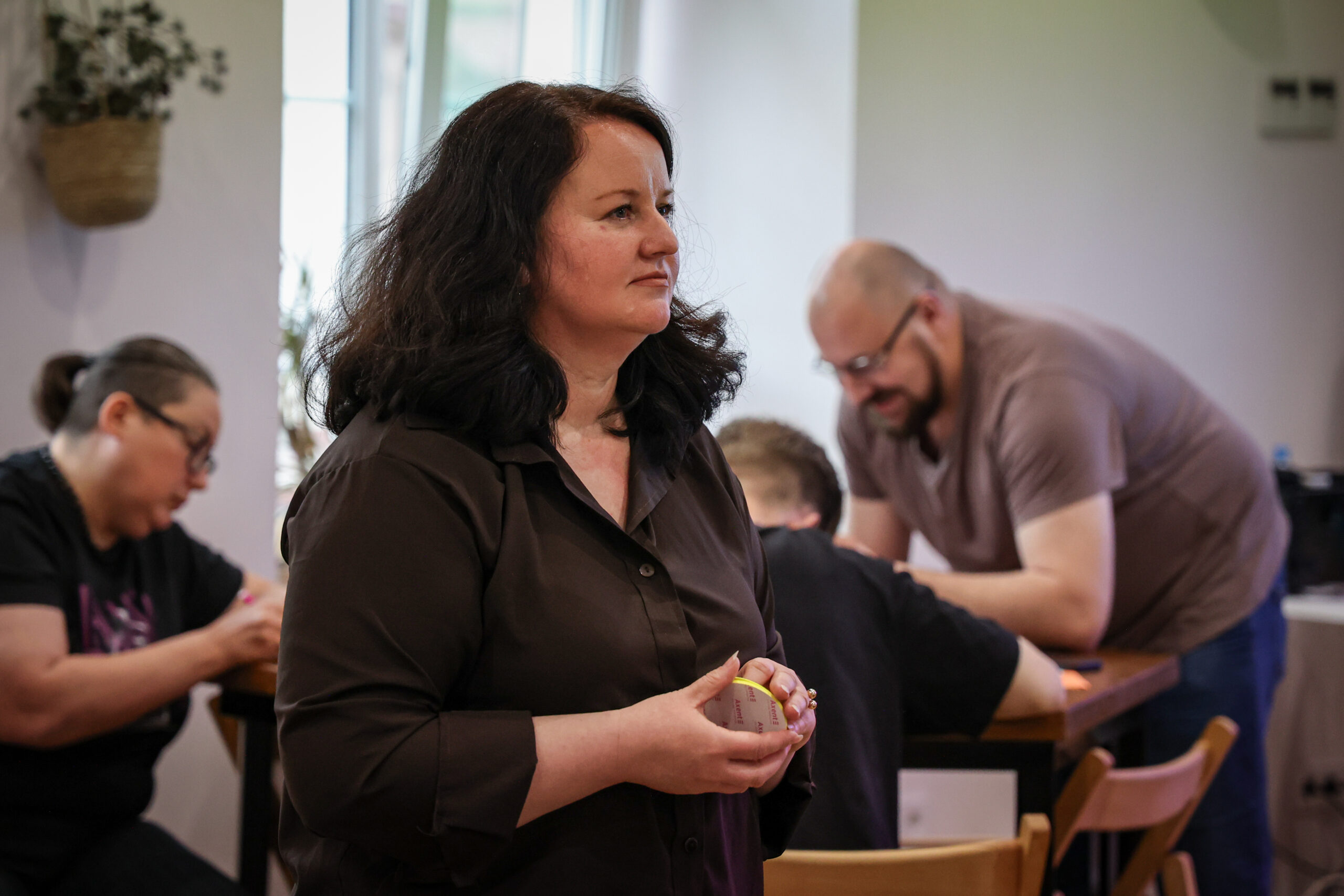
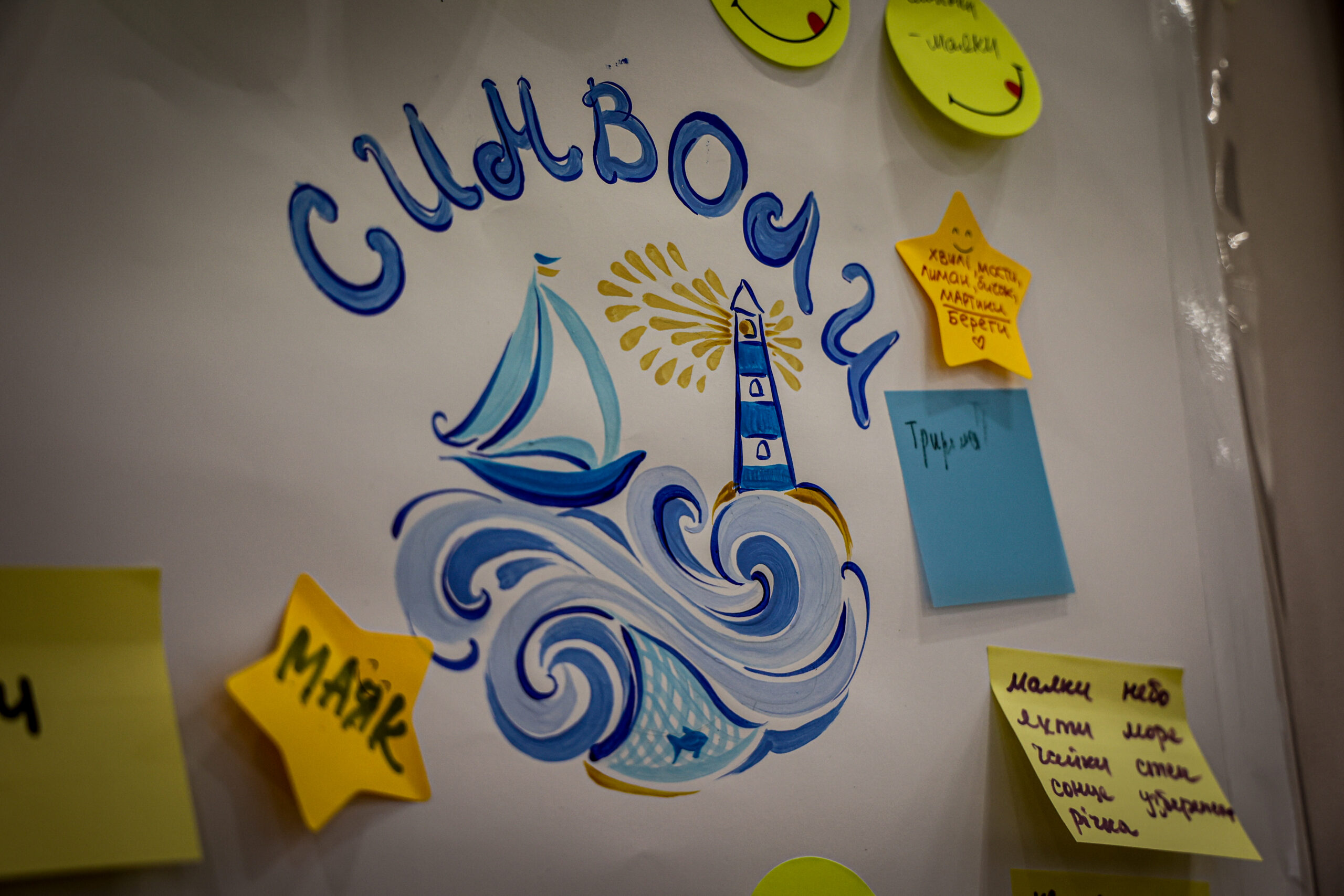
In the first stage of the event, historians, museum professionals, artists, and representatives of the civil society sector participated in facilitated discussions led by Ruslana Sikalenko, a cultural activist and representative of the NGO “Adult Training and Education Center “Pivden”. Among the ideas generated were the digitization of archival materials, old prints, technical drawings, and maritime periodicals; the creation of a unified online platform dedicated to the maritime heritage of the Mykolaiv region; and the development of 3D tours of industrial sites and historical locations in the region. Special attention was given to preserving the oral history of sailors, shipbuilders, and port industry workers, as well as creating interactive museum spaces and AR reconstructions. Other initiatives include organizing international art residencies for Ukrainian and European artists, developing industrial tourism, and promoting maritime archaeology and underwater cultural heritage.
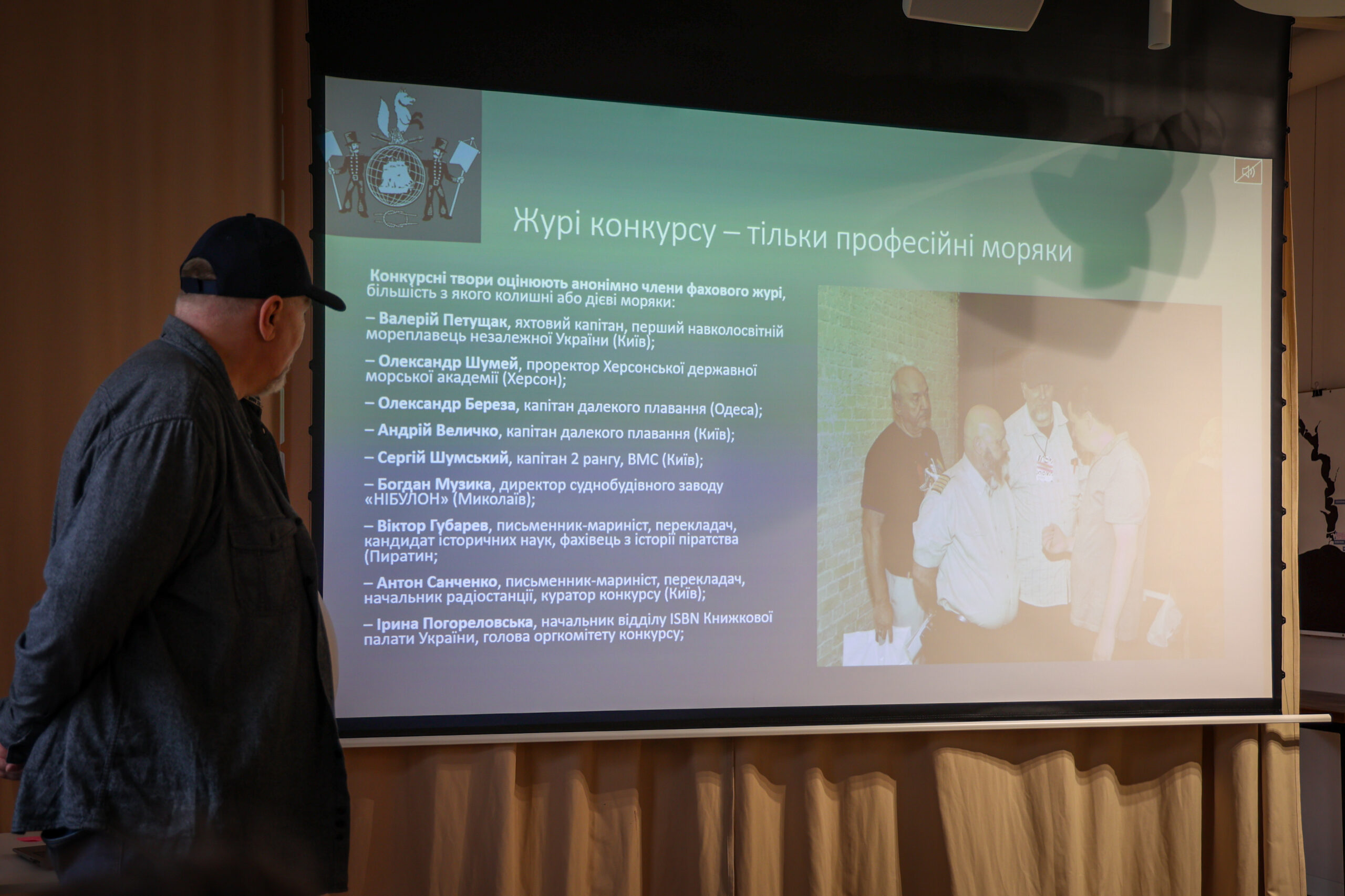
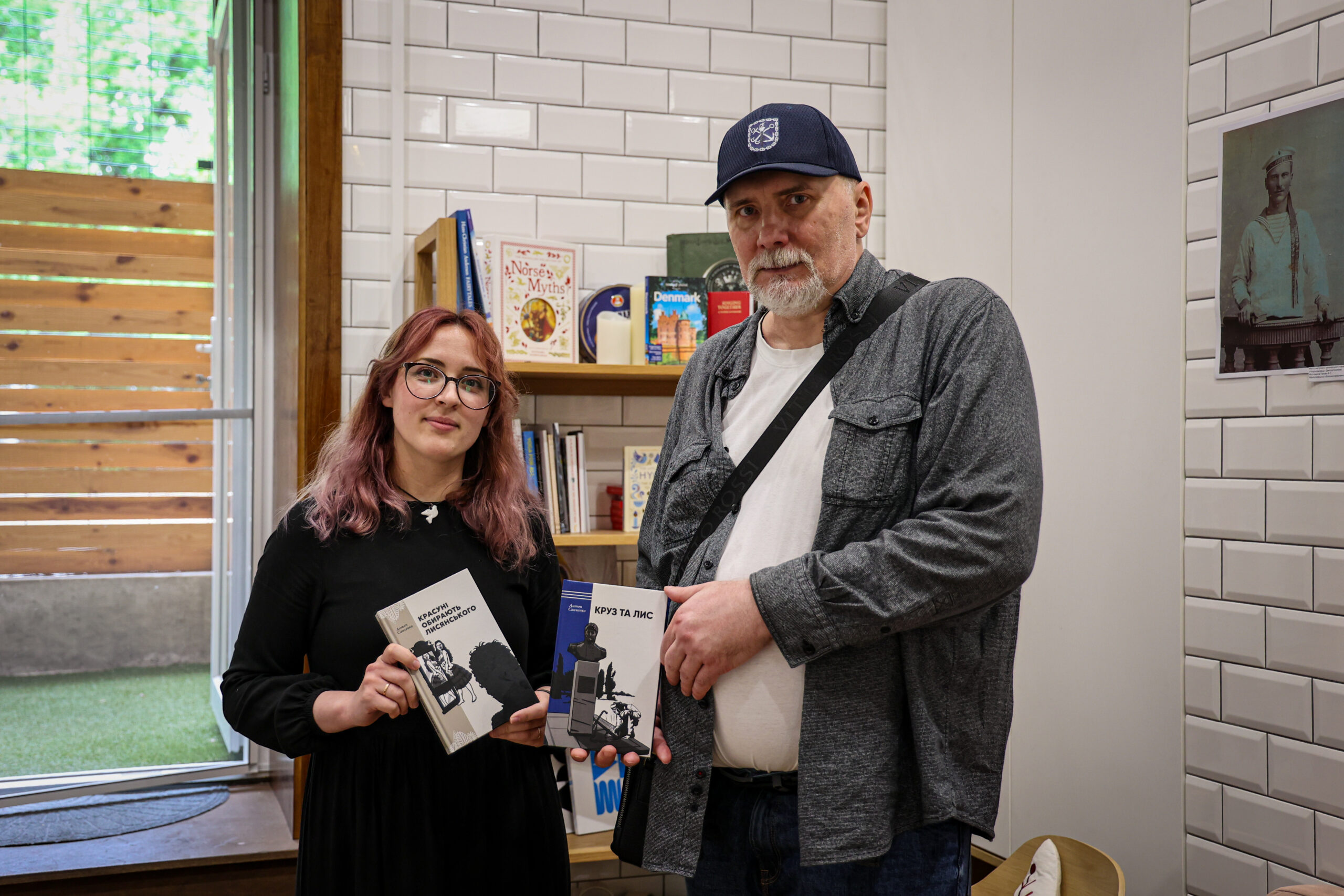
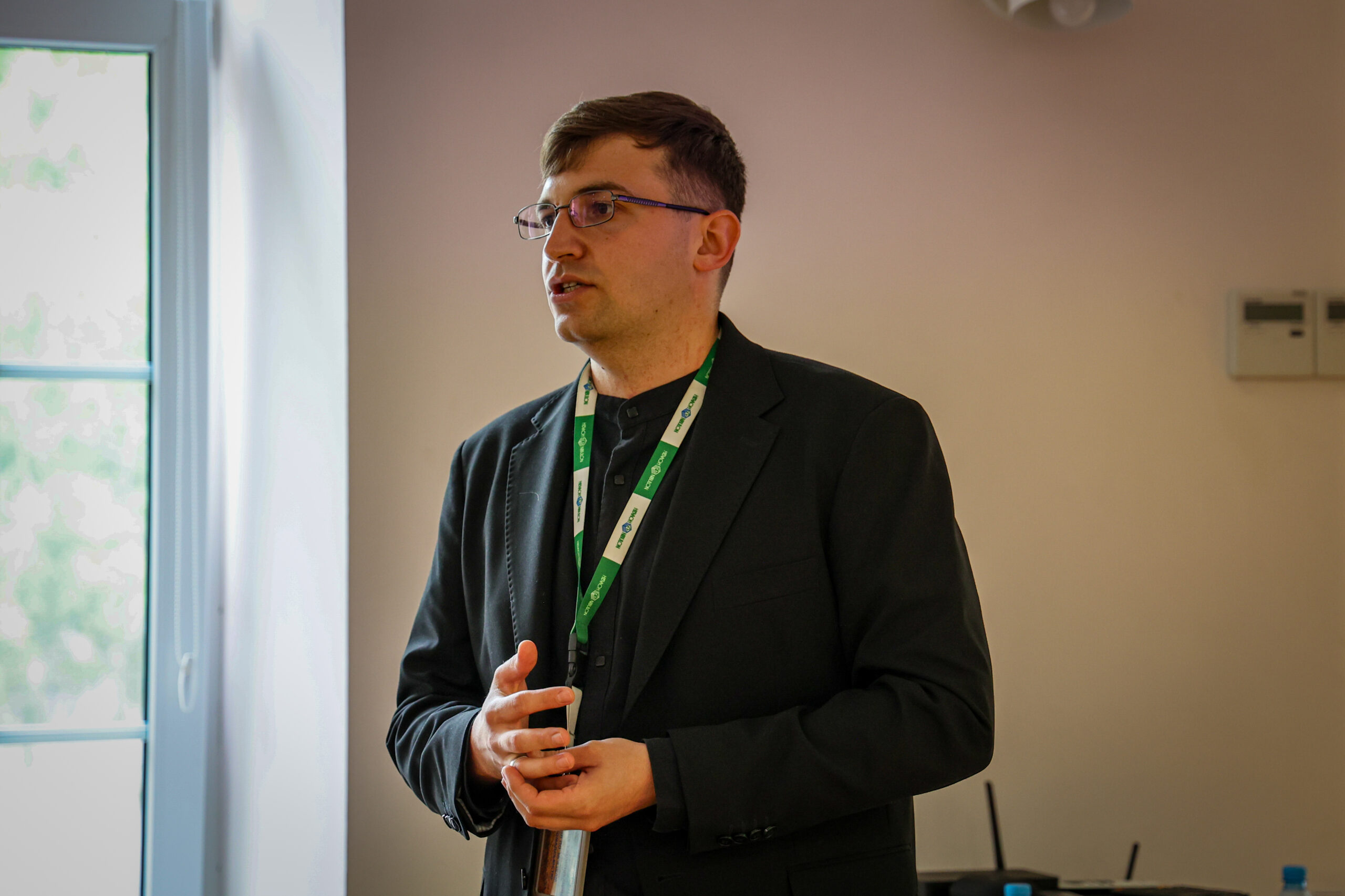
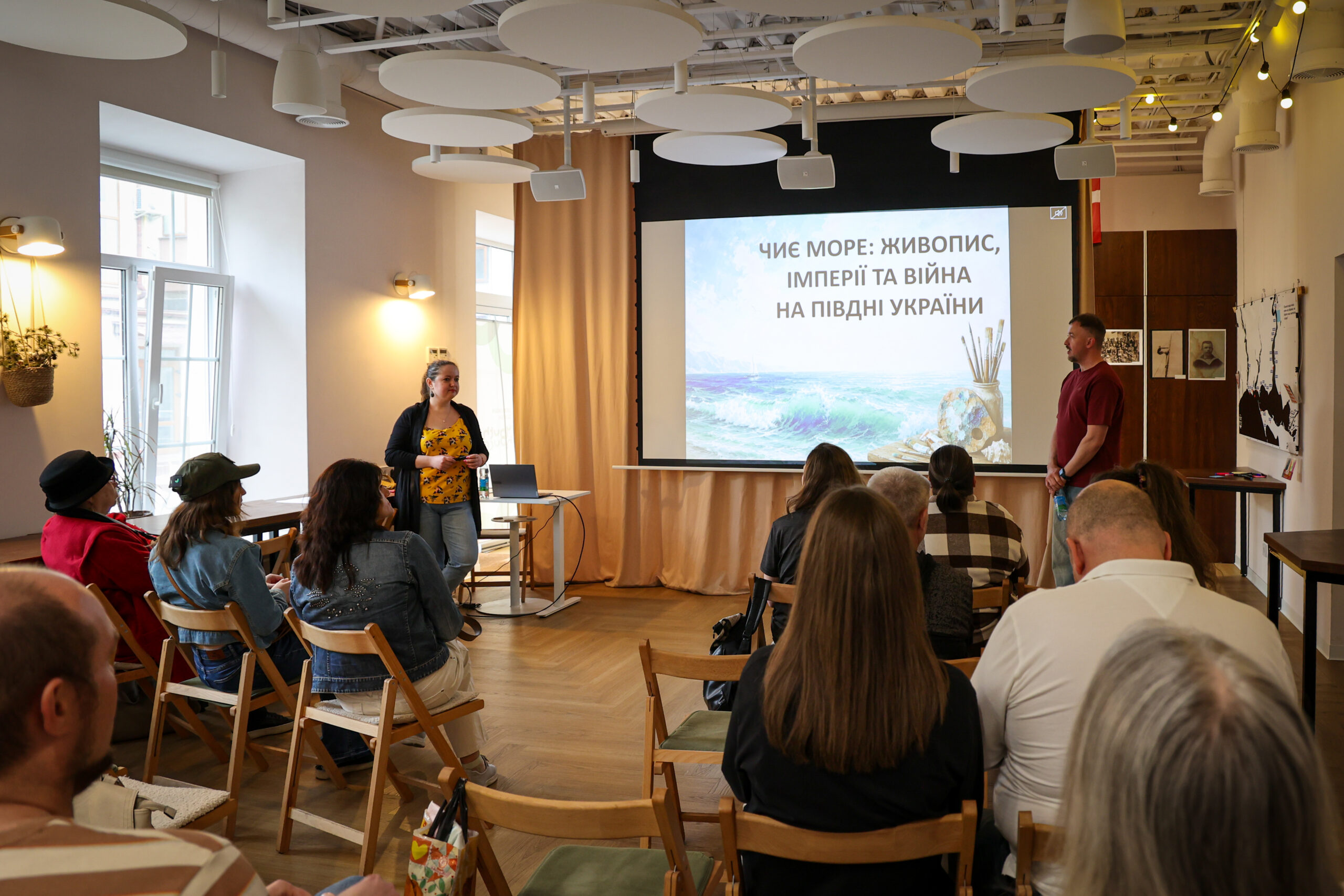
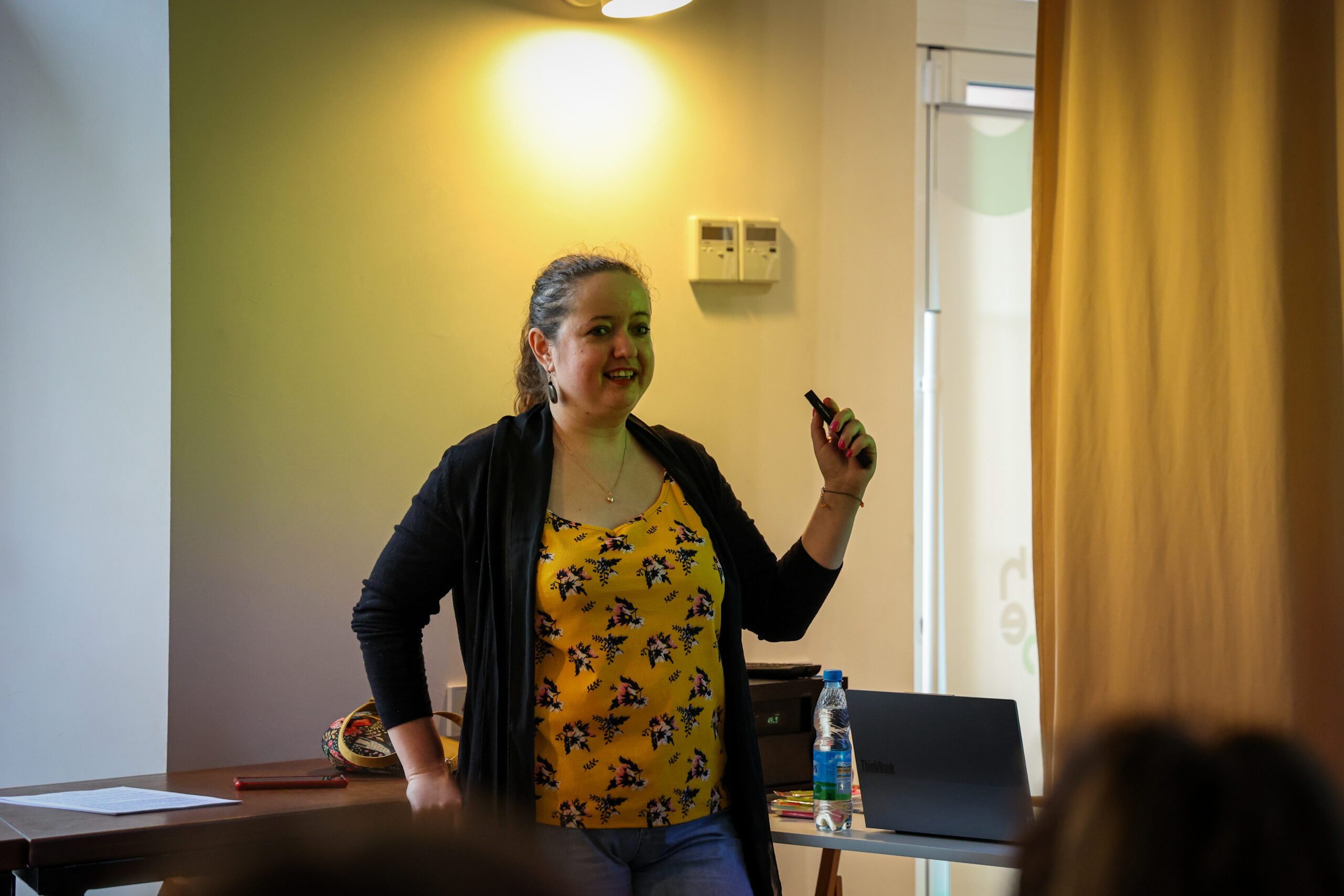
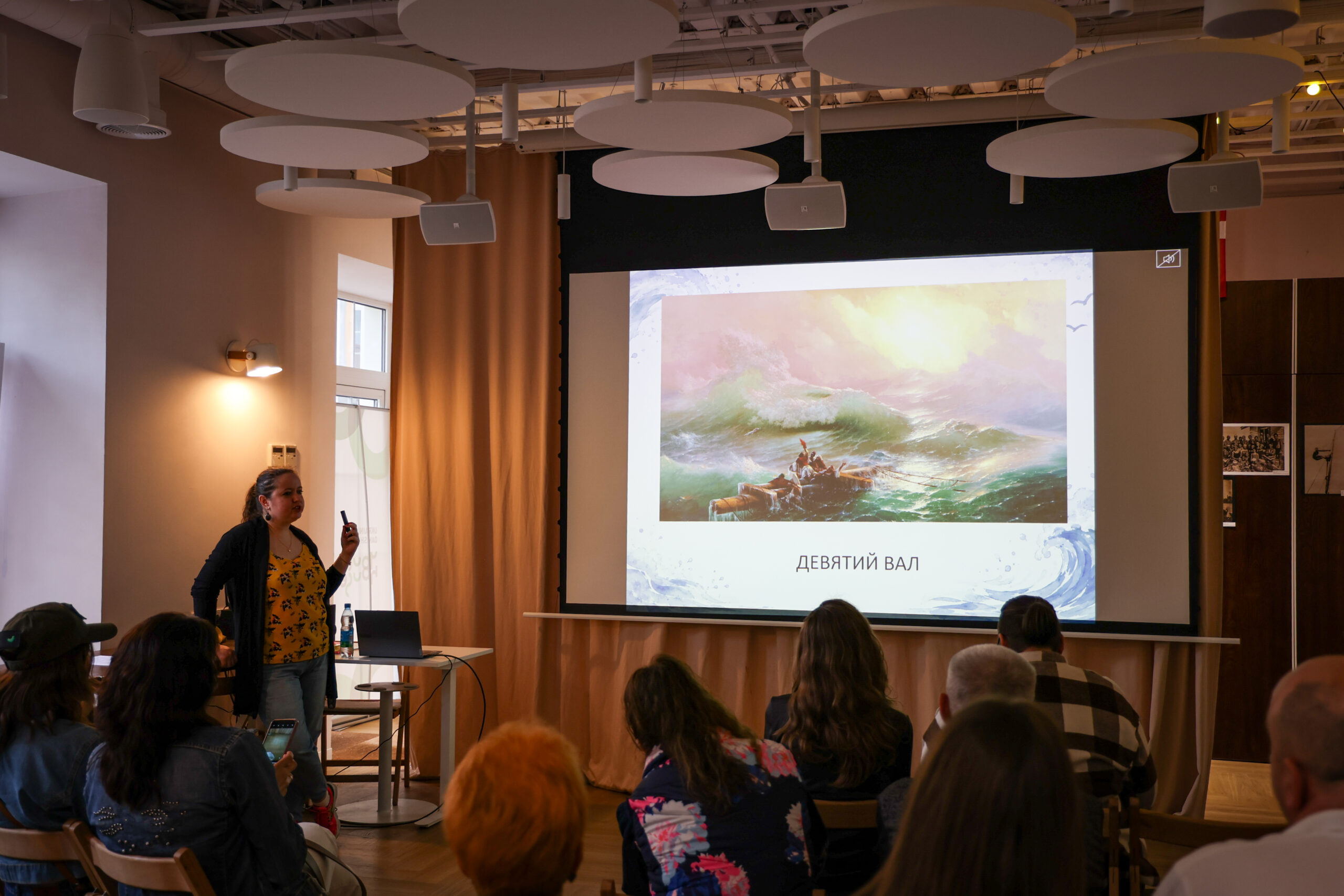
Following the session, maritime writer Anton Sanchenko presented a study on Ukrainian maritime themes in literature. Sanchenko notes that cities in the South are currently facing similar challenges while simultaneously shaping a new vision for their future, seeking ways to be valuable and interesting to the world in the post-war period. Vyacheslav Shpakov, an expert at NIBULON, spoke about the company’s history and the evolution of grain exports from southern Ukraine from ancient times to the present, particularly regarding the operation of the maritime corridor during the war. Art historian Yasya Davydenko led a lecture and discussion on the Black Sea as a space where geopolitics, colonial wars, and cultural boundaries intersect.
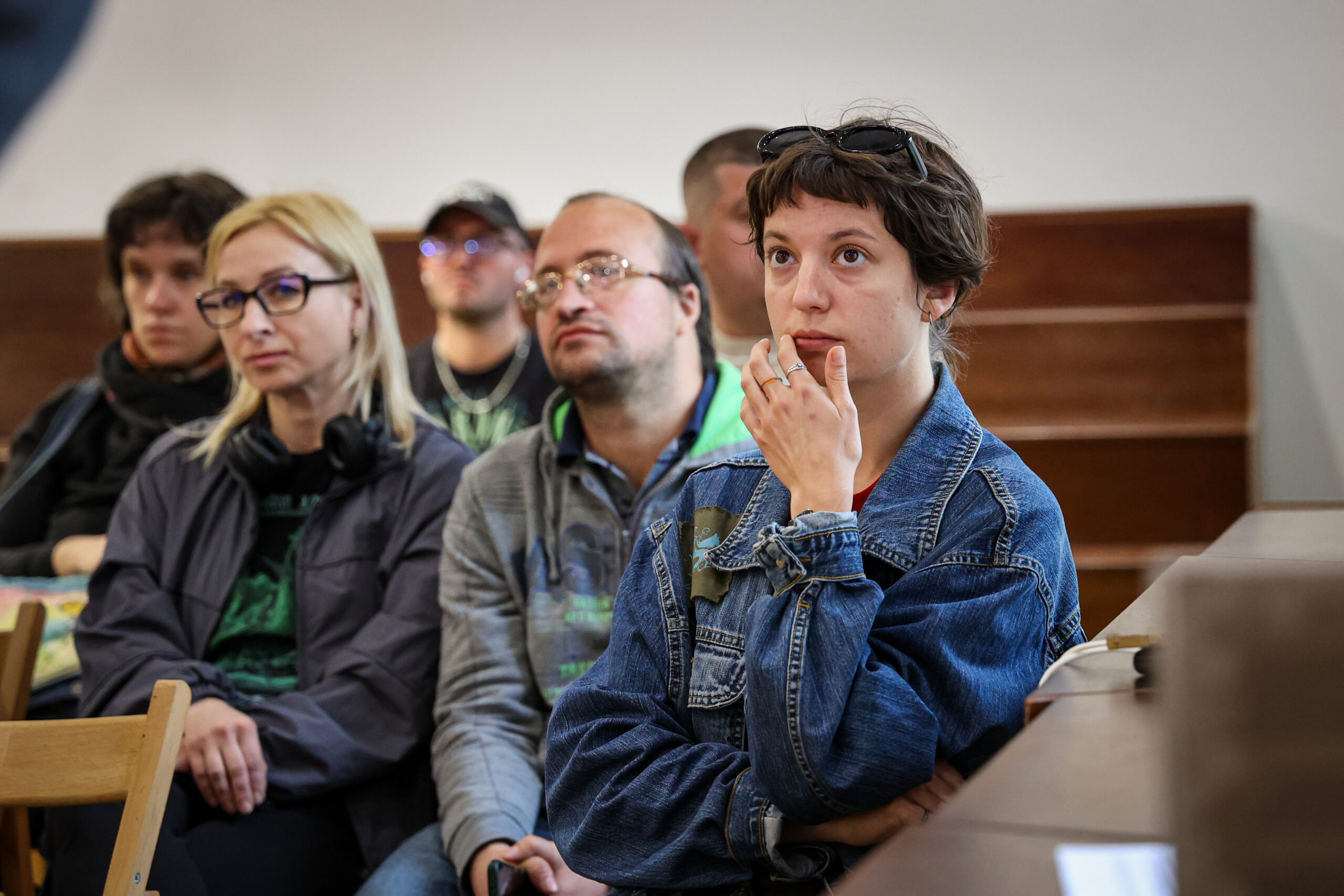
Throughout the day, the outdoor exhibition “Aquatorium of Senses” was on display, featuring reproductions of digitized seascapes and archival photographs from the collections of Mykolaiv museums. There was also a master class on Taurian painting and a retrospective screening of the 2013 film “Such Beautiful People” by director Dmytro Moiseyev, supported by the Dovzhenko Center. In addition, the “Dry Dock” area was open for the youngest visitors, where children learned to tie nautical knots, drew with salt, and watched animated videos about local history.
The “Mykolaiv’s Maritime Heritage” project aims to bring together fragments of the region’s maritime identity, especially in the context of the war and the inaccessibility of the sea for residents of the Mykolaiv region due to the temporary occupation and the security situation on the southern coast.
The event is organized by the MY ART Platform under the mentorship of the Odessa National Art Museum and with the support of the “Partnership for a Strong Ukraine” Program, which is funded by the governments of the United Kingdom, Estonia, Canada, Norway, Finland, Switzerland, and Sweden.
The project’s media partners are the Mykolaiv Crisis Media Center and the Mykolaiv Development Agency.
The project partner is the Ukrainian-Danish Youth House in Mykolaiv.
Photo: MY ART Platform / Maksym Misailov. More photos on the Facebook page.